Many people can’t imagine running or exercising without music. The right rhythms can give us a boost and motivate us, plus they help maintain a steady pace. Headphones are thus becoming an increasingly common part of sports equipment. But how do you choose the right ones that won’t bother you during activity?
In this article, we’ll take a look at various types of headphones – over-ear, in-ear, or Bluetooth headphones, explain what they should offer, and advise you on which type to choose specifically for running and sports.
Is it good to have headphones while running?
When it comes to listening to music while running, people can be divided into two camps. Some simply can’t imagine running without headphones – they get bored, lack motivation; others don’t feel safe with headphones – they miss contact with their surroundings and can’t hear traffic.
So, are headphones suitable for running? Yes and no. It’s certainly necessary to consider safety risks and the environment in which you exercise. If you work out in a gym, run on a track, or in an enclosed area, headphones are fine. On the other hand, if you want to run on a road with cars or a busy bike path, headphones are not recommended.
If the situation allows it, headphones can help improve your sports performance. Music with the right tempo helps maintain rhythm and even running cadence, motivates better performance, allows better focus, and kills boredom. According to some studies, music even reduces the feeling of effort and fatigue.
What types of headphones exist
The current headphone market offers many types that differ in design, connection, and features. We can roughly divide them as follows:
By design
In-ear (earbuds)
They are small and practical, inserted into the outer ear or ear canal. They can be in the form of plugs or so-called buds. Suitable for sports, but if they don’t fit perfectly, they may fall out.
On-ear
They look like smaller cups placed over the head and resting on the ear (without fully enclosing it). They are less stable during sports and may slip off. More comfortable for home use.
Over-ear
Large cups that completely cover the ear, effectively isolating sound. You can listen to music without being disturbed by the surroundings. They are relatively large and heavy, so not suitable for sports. Complete isolation from the environment is also unsafe for running.
Behind-the-ear
These also resemble smaller plugs or buds but have a hook or structure that goes behind the ear, sometimes behind the head. This helps keep them in place, which is especially useful for sports.
 (1).jpeg)
By connection
Wired
Classic headphones with a cable (3.5 mm jack or USB-C/Lightning). They don’t have a battery, which speeds up transmission, but cables can get in the way during sports.
Wireless (Bluetooth)
They can be completely cable-free (True Wireless), so each earbud is separate, or they can have a cable within the structure. Powered by Bluetooth, making them ideal for running. Can be paired with both a phone and a smartwatch.
With built-in memory
They have internal storage for music, allowing them to work without a phone. They essentially combine headphones with an MP3 player. Very practical for exercise and running, and there’s no slow transmission like with Bluetooth.
By features
For example:
- With ANC (active noise cancellation) – ideal in the gym, less safe outdoors.
- With transparency mode – lets in ambient sounds, increasing safety.
- With IPX4 – IPX8 resistance – extremely resistant to sweat and water.
What sports headphones should offer
For sports headphones to be practical, unobtrusive, and able to withstand heavy use, they should meet the following parameters:
- Stable fit – should hold firmly in or on your ears even during rapid movement, ideally with hooks or sports attachments.
- Comfort – even minor discomfort can distract you while running, so it’s best if they are light, fit well, and don’t press even during long use.
- Sweat and water resistance – at least IPX4 protection (against sweat and splashing water from all directions) is recommended.
- Sufficient battery life – for wireless headphones, ideally at least 5 hours of playback per charge, possibly with fast charging.
- Good connectivity – stable Bluetooth connection (version 5.0 or higher) to ensure good music transmission.
- Additional features – such as transparency mode, ANC, or internal storage.
 (1).jpeg)
Is it worth buying Bluetooth headphones?
Although choosing the ideal headphones is a matter of individual taste and needs, in general, Bluetooth headphones for exercise or running are highly recommended. Nowadays, you can find many affordable models starting at around 30 euros.
They offer maximum comfort and freedom without tangled cables, sufficient battery life for typical sports activities (usually at least 5 hours per charge), are sweat-resistant, and often available in a sports design (with a hook).
You can also find quality Bluetooth headphones in the Orava brand range.
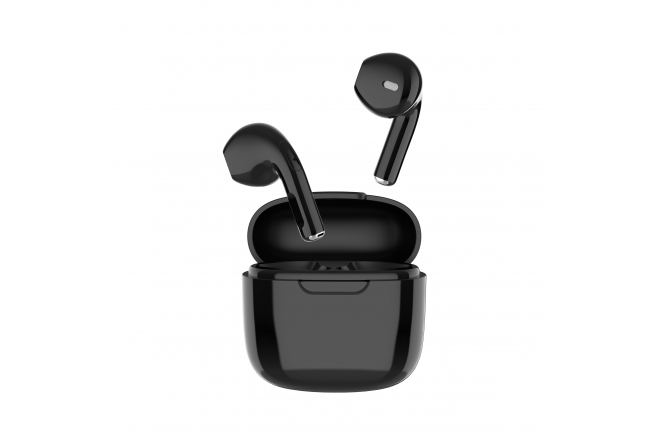
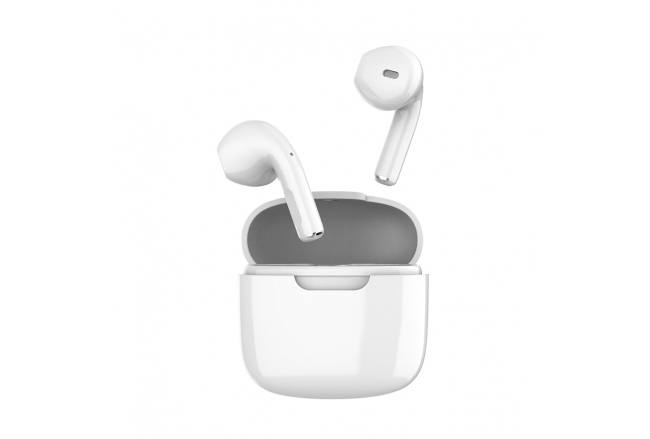
The Livebass Mini model offers great sound, simple touch controls, and practical features. It has Bluetooth 5.3, a microphone, IPX3 protection (against water drops up to 60 degrees from vertical), and 2–3 hours of playback time.
These headphones are available in white and black versions, and you’ll appreciate them for most sports activities except long multi-hour runs or treks.
Choose your ideal sports headphones and take your performance to the next level.