Carnival season (Fašiangy) is here! This popular period of dancing, balls, carnivals, and boisterous fun begins every year after Epiphany (January 6) and ends on Ash Wednesday, which marks the start of the 40-day Lenten fast before Easter. But before that happens, one must enjoy life to the fullest.
Parades, Carnivals, and Masks
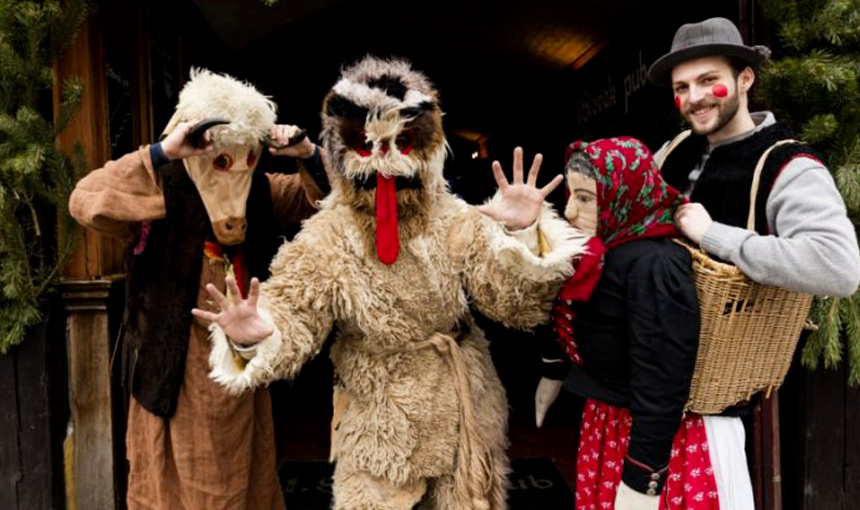
Did you know that the Slovak name "Fašiangy" comes from the Old High German "vaschang," meaning "the last drink before the fast"? During the times of Great Moravia, the term "mjasopust" was used (Czechs still use "masopust" today), but in Slovakia, the German-derived name became established. Carnival is the last opportunity for feasting, fun, and community gathering before Easter, forming a transition from winter to spring. Our ancestors celebrated this period with joy. They organized masquerade balls, carnivals, and parades where they dressed up as animals or fairytale characters. The parade featured masks like the "turoň" (bull-man), men dressed as women, bears, horses, goats, devils, death, gypsies, brides and grooms, or old women... This procession went through the village from house to house, carrying a pole upon which locals would skewer all sorts of treats like sausages, blood sausages, and more. Music played, laughter echoed everywhere, and it was true unbridled fun with excellent food and drink. Our ancestors simply knew how to have a good time. In urban settings, balls were organized – in medieval times by guilds, later by the nobility and city dignitaries, and eventually by local governments. Today, city and school balls, as well as balls for various interest groups, remain very popular. After all, who wouldn't want to eat well, drink, and dance with a cheerful crowd?
Carnival means Pig Slaughter, Fánky, and "Hriatô"
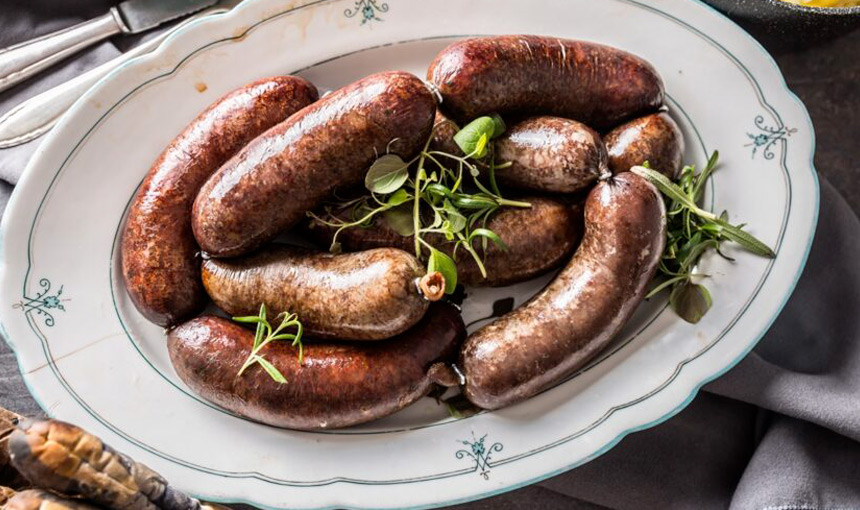
Just as we cannot imagine Carnival without the smell of doughnuts fried in oil, it wouldn't be complete without delicacies from a traditional Slovak pig slaughter (zabíjačka). Long ago, this was a small village celebration – half the village would gather – people helped each other, drank, processed the pork, laughed, and joked... Anyone who didn't experience a true village pig slaughter in the late 20th century might regret it. However, you can still enjoy homemade delicacies like aspic, blood sausages, liver sausages (jaternice), headcheese, or fresh, warm cracklings today, even without raising pigs in a pen like our grandmothers did. Just get the ingredients and use clever electrical appliances to prepare them in the comfort of your home. Try making homemade liver sausages with us and bake authentic Carnival "fánky." Other Carnival specialties include roasted goose with potato flatbread (lokše), roasted pork with dumplings and cabbage, and to wash it down, you must have "hriatô." This alcoholic drink made from spirits, butter or bacon, and honey warms you up perfectly after a walk in the freezing outdoors or skiing; in some families in central Slovakia, it is a traditional welcome drink during family celebrations.
Homemade Liver Sausages (Jaterničky)
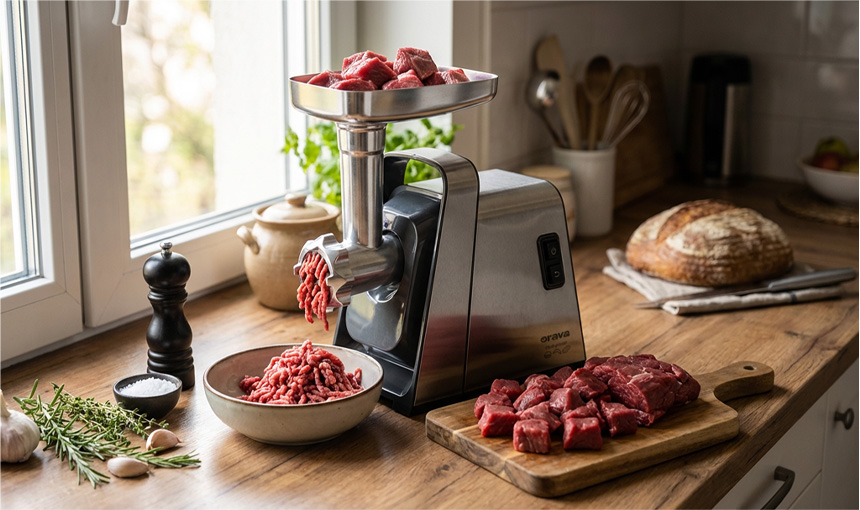
The Orava MM-903 electric meat grinder will help you with the preparation, allowing you to easily grind meat coarsely, medium, or finely. It also comes equipped for making and filling sausages.
Ingredients:
- 1 kg pork meat (e.g., shoulder or neck)
- 500 g pork liver
- 500 g pork fat
- 1 kg rice (cooked)
- 2 large onions (finely chopped)
- 5 cloves of garlic (minced or pressed)
- 2 tablespoons marjoram
- 1 tablespoon ground sweet paprika
- salt and black pepper to taste
- casings for filling (thoroughly cleaned)
Method:
- Boil the pork, liver, and fat in salted water until tender. Once cooked, let them cool and cut into small pieces or grind them in the meat grinder.
- Cook the rice and let it cool.
- Sauté the onion in a pan until golden brown, add the garlic, and roast briefly.
- In a bowl, mix the chopped or ground meat, liver, fat, cooked rice, sautéed onion with garlic, marjoram, paprika, salt, and black pepper. Mix thoroughly until a uniform mixture is formed.
- Fill the casings with the prepared mixture using a filling tool or by hand. Make sure the casings are not overfilled so they don't burst during cooking. Tie the ends of the casings.
- Place the filled sausages in a large pot of salted water and cook over low heat for approximately 30–40 minutes. Gently prick them with a needle during cooking to release excess air.
- The sausages can be served immediately after boiling or fried in a pan or oven to get a crispy crust. Serve with bread, sauerkraut, or mustard.
Fánky (Fried Pastry)
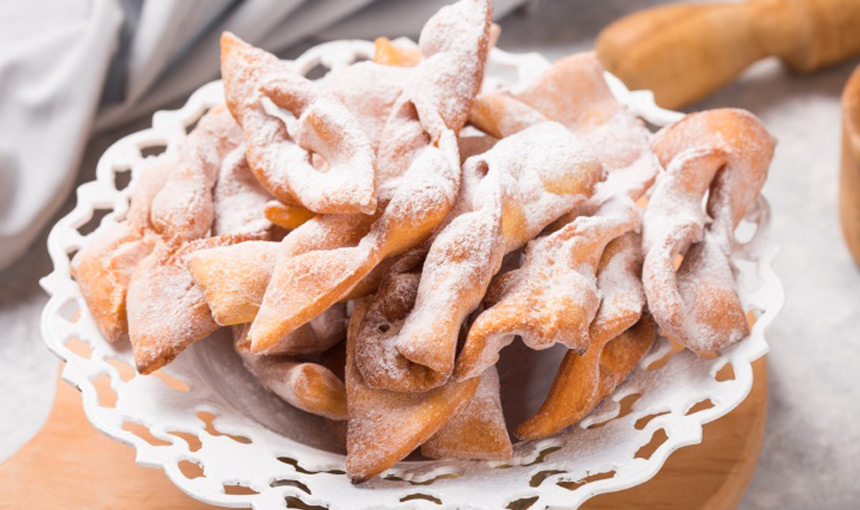
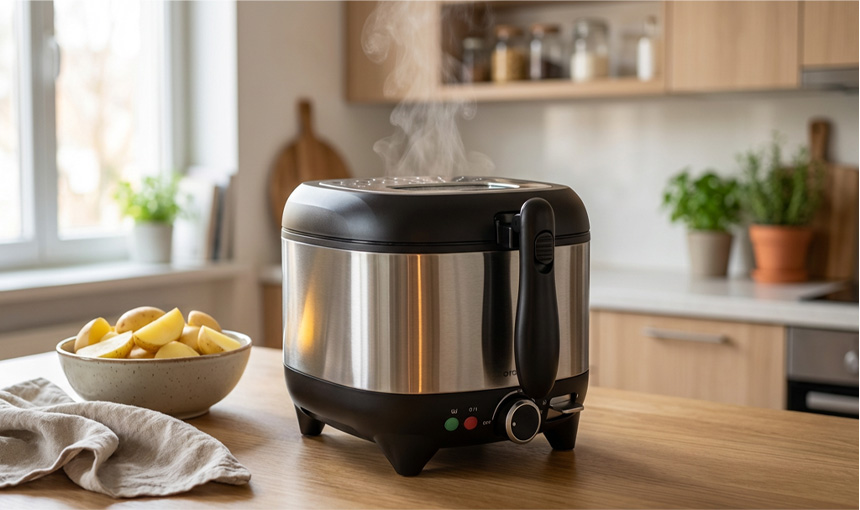
This fried pastry made from delicate dough has a typical shape of rectangles or diamonds with a slit in the middle. It is popular for its light and crispy texture, usually sprinkled with powdered sugar and served with jam or honey. You can fry "fánky" in a pan submerged in lard, or use a high-quality deep fryer – for example, the compact Orava FR-111 deep fryer with a 1.5-liter container and a sufficiently large frying basket.
Ingredients:
- 500 g all-purpose flour
- 50 g granulated sugar
- 50 g butter (melted)
- 4 egg yolks
- 200 ml heavy cream
- 1 tablespoon rum (optional, for flavor)
- a pinch of salt
- oil for frying
- powdered sugar for dusting
Method:
- Sift the flour into a large bowl, add sugar, a pinch of salt, yolks, melted butter, heavy cream, and rum.
- Knead into a smooth dough that should be elastic and not sticky. If the dough is too sticky, add a little flour.
- Wrap the dough in plastic wrap and let it rest for about 30 minutes.
- Roll out the dough into a thin sheet (approximately 2–3 mm thick).
- Cut it into rectangles or diamonds. Make a small slit in the middle of each piece and pull one end of the dough through the slit to create the typical shape.
- Heat enough oil in the deep fryer. Fry the "fánky" on both sides until golden brown (about 1–2 minutes per side).
- After frying, place them on paper towels to remove excess oil.
- Sprinkle the "fánky" with powdered sugar and serve. You can complement them with jam or honey to taste.
Enjoy your meal!
Photo: Orava, Internet