Diffusers are an increasingly popular addition to modern households. Not only can they refresh, fragrance, and humidify the air, but they also serve as an aesthetic accessory. Read more about the benefits a diffuser can bring you.
A clean, fragrant, and healthy home is a priority for most of us. However, air fresheners full of aggressive chemicals have long gone out of fashion, and paraffin aromatic candles are also not ideal for our health. A diffuser can therefore be a great **solution to refresh the air in the home**.
What is a diffuser and how does it work
A diffuser is a small device designed to **disperse essential (etheric) oils**. It works on the principle of air flow or creating a fine mist or water vapor, which carries the scent and active substances from the oils into the air. There are several types of diffusers that differ slightly in the way they work.
The most common types include:
Heat Diffuser
This type of diffuser works on the principle of gently heating the oil and subsequently releasing the aromatic substances into the air. Due to the heating process, it is slightly **less gentle on the properties of the essential oil** (it may slightly degrade it) than other types.
Fan Diffuser
This diffuser disperses the essential oil using an air current, which is usually generated by a small fan. **No water** or heat is therefore needed. Oil consumption is relatively low, and the resulting aromatic effect is very subtle.
Nebulizing Diffuser
This diffuser uses neither heat nor water to disperse the oil. The oil is **dispersed into microscopic particles (aerosol)** in the form of a mist using an air current or mechanical pressure. This process is called nebulization. The oil is not damaged by its effect, and the result is intense.
Ultrasonic Diffuser
This type of diffuser uses the principle of **ultrasonic or sonic vibrations**, which disperse the water with the contained oil into the air. It is quieter than other types and does not degrade the quality of the essential oil.
It is the **ultrasonic or sonic** diffusers that are among the most popular models. Thanks to their dual function – aromatherapy and air humidification – they replace two devices at once.
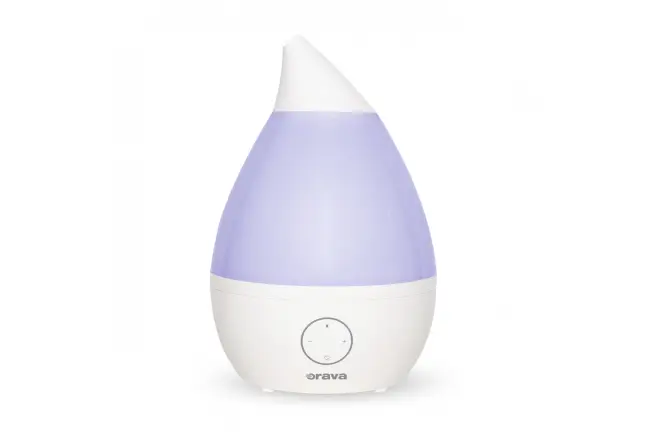
Try, for example, the **Orava HUM-42 ultrasonic air humidifier** with quiet operation and built-in LED light with 7 colors, which will help you create a more pleasant climate in your home.
.jpeg)
What are the effects of aromatherapy
The daily rush puts excessive strain on the human body and psyche. Aromatherapy can be a great **way to relax and unwind.** It uses the effects of essential oils from plants to support physical, psychological, and emotional well-being.
The biggest benefits that aromatherapy brings include:
- stress reduction and tension release,
- mood improvement and increased energy,
- support for concentration and creativity,
- improved sleep quality,
- support for respiratory health,
- relief from headaches and migraines,
- air purification and antimicrobial effects.
The effects of aromatherapy also depend on the specific oil you use. Each of them has a unique composition of substances that can act differently on the human body or psyche – for example, stimulating, calming, or antibacterial.
Popular types of essential oils
Not sure which essential oil to choose for your diffuser? You can try one of the proven oils that are known for their beneficial effects:
- Lavender – promotes relaxation, improves sleep, relieves psychological stress.
- Peppermint – increases concentration, refreshes the mind, relieves headache.
- Eucalyptus – supports breathing, loosens mucus, has antibacterial effects.
- Lemon – has stimulating effects, improves mood, refreshes the air.
- Tea Tree – has strong antibacterial and antiviral properties, supports immunity.
- Ylang Ylang – induces relaxation and calmness, lowers blood pressure.
**Some oils can be mixed together** to create new scents and achieve combined effects. Try to **adhere to the recommended concentration** (e.g., 3 – 5 drops per 100 ml of water in an ultrasonic diffuser).
What to watch out for when using a diffuser
Although the use of most diffusers and essential oils is safe, it is good to follow a few important principles to ensure that the effects of aromatherapy are beneficial, not harmful.
- **Don't overdo it with the oil** – essential oils are highly concentrated, and excessive amounts can irritate the respiratory tract, so dose them drop by drop.
- **Don't use the diffuser too often** – too much of anything is harmful, so don't leave the diffuser running continuously, but enjoy aromatherapy for an hour a day, for example.
- **Beware of sensitive individuals** – children, pregnant women, elderly, or sick people may be more sensitive to the effects of oils, so do not expose them to excessive exposure.
- **Pay attention to the quality of the oil** – avoid cheap and poor-quality oils that may contain synthetic substances – prefer high-quality 100% natural oils.
- **Do not use the oil directly on the skin** – do not apply concentrated oil to the skin without diluting it (e.g., with almond oil), otherwise irritation or an allergic reaction may occur.
- **Do not consume essential oil** – the vast majority of essential oils are not intended for consumption, so do not drink them or use them in food.
- **Do not leave the diffuser plugged in** – for safety reasons, unplug the diffuser from the power source when inactive if you do not want to risk overheating or a short circuit.
By following these recommendations, aromatherapy can become a simple and effective way to refresh and humidify the air in the home, support psychological well-being, and conjure up a pleasant atmosphere.